
2025-11-25
Dr. Pongsak Wonglertkunakorn
What Is Agentic AI and Why It Matters for the Future Workplace?
Dr. Pongsak Wonglertkunakorn
- Workplace Consultant
- Ph.D. in Management from National Institute of Development Administration
- M.S. in Computer and Information Science from University of Pennsylvania
- B.Eng. in Computer Engineering from Chulalongkorn University
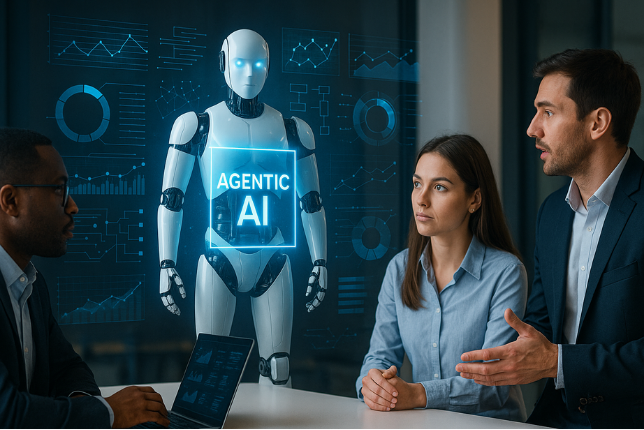
If 2024 was the year AI became a common assistant, 2025 is the year AI becomes a co-worker. The term “Agentic AI” is becoming more widely used, but many still don’t fully understand what makes it different from the AI tools we were familiar with before.
In simple terms, traditional AI waits for our instructions.
Agentic AI, however, can act, decide, and pursue goals on its own within defined boundaries.
Instead of being a passive tool, it behaves more like a junior staff member who understands tasks, monitors progress, and knows how to move things forward without being told every detail.
For the workplace, this is a huge shift.
Imagine an AI that automatically monitors meeting room usage, identifies patterns, checks energy consumption, alerts when bottlenecks appear, and even recommends actions proactively. Or an AI that coordinates with systems like Roomminister to assign rooms, schedule sessions, prepare digital resources, and notify the right people—without anyone clicking a button.
This is what Agentic AI is built for.
The more dynamic an organization becomes, the more important these autonomous capabilities will be. Teams will rely on AI agents to reduce operational friction so they can focus on creativity, strategy, and relationships—the things humans are naturally best at.
Agentic AI is not replacing jobs.
It is replacing busywork.
And for modern workplaces preparing for transformation, understanding this shift early will become a competitive advantage.